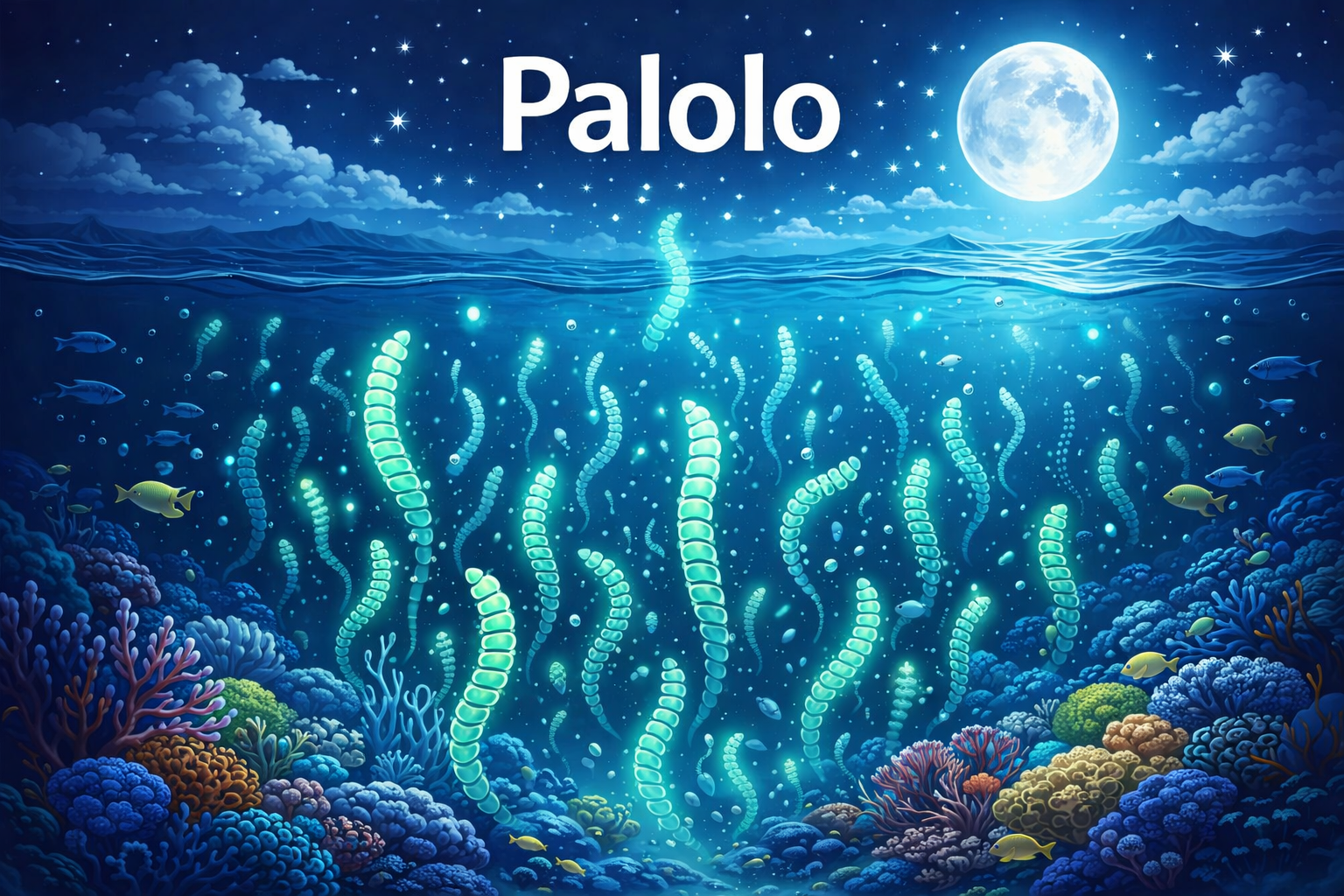
Palolo
Palolo is one of the most intriguing natural phenomena in the marine world. Known primarily for the palolo worm and its dramatic spawning behavior, palolo has captured the attention of scientists, coastal communities, and curious observers for centuries. It is not just a biological event but a cultural tradition, an ecological indicator, and a reminder of how deeply connected humans are to the rhythms of nature.
What makes palolo so remarkable is its timing and precision. The palolo worm appears only during specific lunar phases, rising from coral reefs in massive numbers for a short period before disappearing again. This event happens so predictably that coastal communities have built traditions, calendars, and celebrations around it.
Despite modern scientific advances, palolo continues to inspire questions and wonder. Its life cycle, environmental triggers, and evolutionary purpose remain subjects of ongoing research. This article explores palolo in depth, explaining what it is, why it matters, and how it connects biology, culture, and the natural world.
What Is Palolo and Why Is It So Unique?
Palolo refers to a type of marine worm that belongs to the polychaete family, living primarily in tropical coral reef environments. Unlike many marine organisms that are visible year-round, palolo worms spend most of their lives hidden within reef structures. They are rarely seen except during their famous spawning event.
The uniqueness of palolo lies in its reproductive behavior. Instead of releasing eggs and sperm gradually, the worm’s body breaks apart, and reproductive segments detach and rise to the ocean’s surface. This mass emergence happens only once or twice a year and lasts for a very short time, sometimes just a few hours.
This phenomenon has fascinated observers for generations because of its precision. The event is synchronized not only among individual worms but across entire reef systems. The coordination suggests an extraordinary sensitivity to environmental cues such as moon phases, tides, and water temperature.
The Life Cycle of the Palolo Worm Explained Simply
The palolo worm’s life cycle is long, hidden, and complex. Most of the worm’s existence is spent embedded deep within coral reefs, where it feeds, grows, and avoids predators. During this stage, it is rarely seen by humans, which adds to the mystery surrounding it.
As the breeding season approaches, the worm undergoes internal changes. Its body differentiates into segments, with the rear portion becoming specialized for reproduction. This reproductive segment contains eggs or sperm, depending on the sex of the worm.
When the environmental conditions are exactly right, the reproductive segment detaches and swims toward the surface. Once there, it releases its contents into the water, allowing fertilization to occur. After this brief appearance, the worm retreats back into the reef, and the cycle begins again.
The Role of the Moon and Tides in Palolo Spawning
One of the most fascinating aspects of palolo is its connection to the lunar cycle. The spawning event typically occurs around a specific phase of the moon, often after the full moon in certain months of the year. This connection has been observed and recorded for centuries.
Scientists believe the moon plays a crucial role by influencing tides, light levels, and possibly hormonal triggers within the worm. The consistency of this timing allows millions of individual worms to spawn simultaneously, increasing the chances of successful fertilization.
Tides also play an important role. Spawning often occurs during outgoing tides, which help disperse eggs and sperm across a wide area. This natural distribution system enhances genetic diversity and reduces competition among developing larvae.
Cultural Importance of Palolo in Coastal Communities
For many coastal cultures, palolo is far more than a biological curiosity. It is a seasonal event deeply woven into tradition, food practices, and communal identity. Communities have long relied on palolo spawning as a predictable natural harvest.
In some regions, the appearance of palolo is celebrated with festivals and shared meals. Elders pass down knowledge about when and where the worms will appear, using traditional calendars based on moon phases rather than modern clocks.
This cultural connection demonstrates how humans have historically lived in harmony with natural cycles. Long before scientific explanations existed, communities understood palolo through observation and experience, proving that traditional knowledge can be remarkably accurate.
Palolo as a Traditional Food Source
Palolo worms are considered a delicacy in many regions. When they emerge during spawning, people collect them using nets, buckets, or even bare hands. The harvest window is short, making palolo a rare and highly valued food.
Nutritionally, palolo is rich in protein and essential nutrients. Its seasonal availability adds to its appeal, as it becomes a special treat rather than an everyday food. Many people describe its taste as unique, with a texture similar to soft seafood.
The harvesting process is often communal, bringing families and neighbors together. This shared experience reinforces social bonds and strengthens cultural identity tied to the natural environment.
Ecological Importance of the Palolo Event
Beyond its cultural value, palolo plays a vital role in marine ecosystems. The mass spawning event provides a sudden surge of nutrients that supports a wide range of marine life. Fish, birds, and other organisms feed on the worms and their reproductive material.
This nutrient pulse helps sustain reef ecosystems, especially in nutrient-poor tropical waters. The timing and scale of the event make it an important ecological driver that influences food chains and population dynamics.
Additionally, the successful reproduction of palolo worms contributes to reef health. As reef-dwelling organisms, they play a role in nutrient cycling and sediment movement within coral structures.
Scientific Research and What Palolo Teaches Us
Palolo has become an important subject in marine biology research. Scientists study it to understand reproductive synchronization, environmental signaling, and evolutionary adaptation. Few organisms demonstrate such precise timing in reproduction.
Research into palolo has also helped scientists understand how marine species respond to environmental cues. This knowledge is increasingly important as climate change alters ocean temperatures, currents, and lunar-related patterns.
By studying palolo, researchers gain insights into broader questions about biodiversity, resilience, and the impact of environmental disruption on marine life cycles.
Climate Change and Its Impact on Palolo
Climate change poses potential risks to the delicate balance that palolo depends on. Rising sea temperatures, coral reef degradation, and changing ocean chemistry could disrupt the cues that trigger spawning.
If the timing of palolo spawning becomes less synchronized, reproductive success could decline. This would affect not only palolo populations but also the ecosystems and communities that rely on them.
Monitoring palolo events can serve as an early warning system for environmental change. Shifts in timing or frequency may indicate broader disruptions in marine ecosystems.
Conservation Efforts and Sustainable Harvesting
As interest in palolo grows, conservation becomes increasingly important. While traditional harvesting has generally been sustainable, increased demand or environmental stress could threaten populations if not managed carefully.
Some communities have implemented guidelines to limit harvesting to specific times and methods. These practices help ensure that enough reproductive material remains in the water for future generations.
Conservation efforts often blend scientific research with traditional knowledge. This collaborative approach respects cultural practices while protecting the long-term health of marine ecosystems.
Palolo in Modern Education and Awareness
Palolo has found a place in modern education as a powerful example of nature’s complexity. Schools and universities use it to teach concepts such as lunar cycles, reproductive biology, and ecological balance.
Public awareness campaigns also highlight palolo to promote marine conservation. Its dramatic spawning event captures public interest, making it an effective ambassador for reef protection.
By learning about palolo, people gain a deeper appreciation for the interconnectedness of natural systems and the importance of preserving them.
Myths, Legends, and Stories Surrounding Palolo
Throughout history, palolo has inspired myths and legends. Some cultures view its appearance as a blessing, while others associate it with spiritual significance tied to the moon or sea.
These stories often reflect respect for nature’s power and mystery. They remind us that long before scientific explanations, humans sought meaning in natural events through storytelling.
Even today, these legends continue to be shared, adding a layer of cultural richness to the biological phenomenon.
Why Palolo Still Matters Today
Palolo remains relevant because it sits at the intersection of science, culture, and ecology. It demonstrates how natural events can shape human traditions and how human understanding evolves alongside scientific discovery.
In a rapidly changing world, palolo reminds us of the importance of timing, balance, and respect for natural cycles. Its continued study and celebration highlight the value of both modern research and traditional knowledge.
As oceans face increasing pressure, protecting phenomena like palolo becomes part of a larger effort to preserve marine biodiversity and cultural heritage.
Final Thoughts on the Wonder of Palolo
Palolo is far more than a marine worm. It is a symbol of nature’s precision, resilience, and beauty. From its hidden life beneath coral reefs to its spectacular annual appearance, palolo captures the imagination in a way few organisms can.
Its story shows how deeply connected humans are to the natural world, even when we don’t always realize it. Through science, tradition, and shared experience, palolo continues to teach valuable lessons about coexistence and respect.
Understanding palolo is not just about learning facts—it’s about appreciating the delicate rhythms that sustain life in the oceans and recognizing our responsibility to protect them.
YOU MAY ALSO READ
About the Author